![]() |
|||||||||||||||||||||||||||||||||||||||||||||||||||||||||||||||||||||||||||||||||||||||||||||||||||||||||||||||||||||||||||||||||||||||||||||||||||||||||||||||||||||||||||||||||||
![]() |
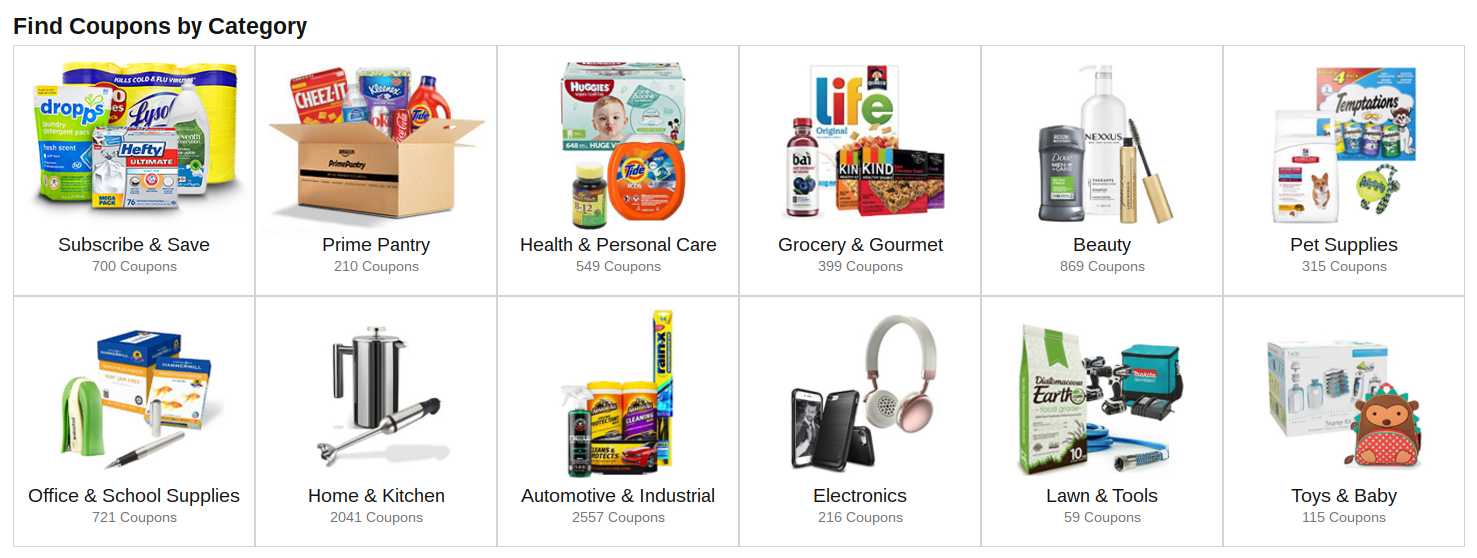
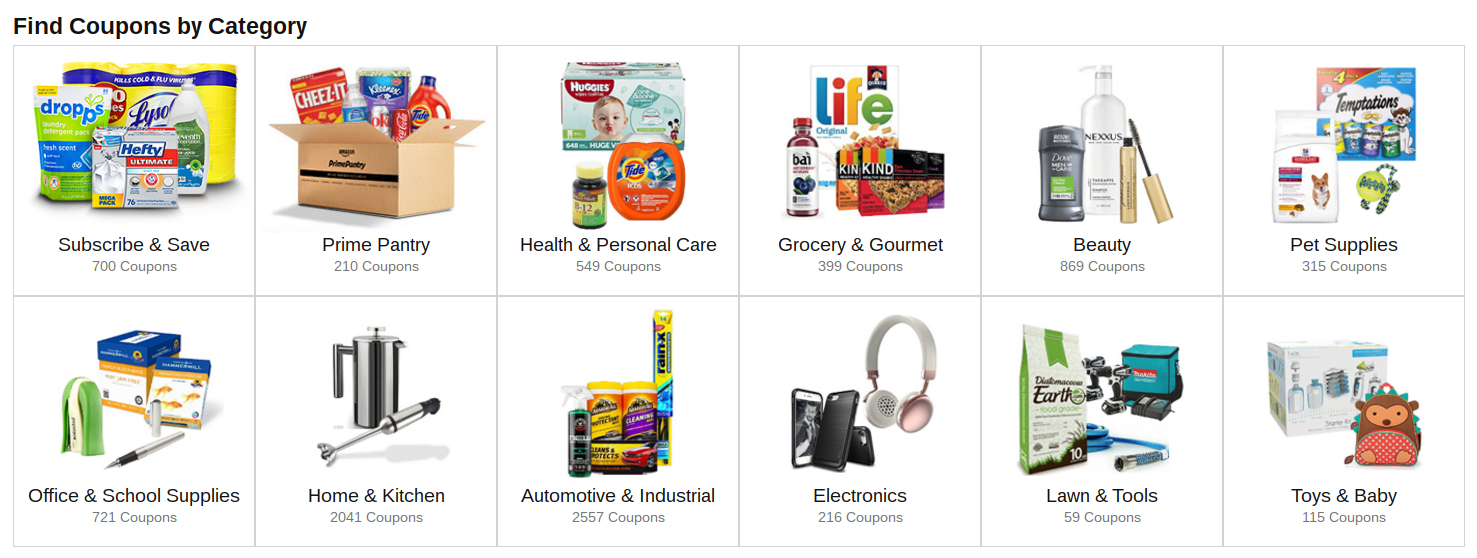
Finding and using Amazon Coupon Codes will save you A LOT of money at the world's #1 online store. Luckily you have just stumbled upon a Frugal Fanatic's online Manifesto about finding and leveraging these special deals at Amazon.com.
Like most online retailers, Amazon.com offers these secret "promo codes" or "coupon codes" to entice customers to shop at their online stores. You can usually type these special deal codes into a box at checkout for instant savings on your purchases - no strings attached what-so-ever. This page will cut you to the quick on finding and using these wonderfully frugal, yet often clandestined deals. When you learn first-hand just how many thousands of dollars you can save every year, on practically ANYTHING, just by applying these extremely frugal tricks of the trade, you will never again shop online without first doing a search for coupon codes (see the coupon code finder, tools, and tips below).
Often after you enter the code into the promo code slot, you have to click a button labeled "apply promotional code", or something similar. Once applied, the percentage off deal, or flat dollar amount off deal, or free shipping deal, or whatever bargain the code corresponds to usually will instantly show up in your shopping cart total before you complete your transaction. Tip: Always confirm the deal was applied to your total before you complete payment on your online order at Amazon or any other retailer.
Unfortunately the stores usually don't supply them directly on their websites and most shoppers don't even realize these promotional deals exist because they often are not widely advertised. But don't worry, Frugalicity.com puts them all at your finger tips below.
Since you have arrived to this Amazon coupon code guide, consider yourself now amonst those rare, savvy, and frugal folks who know where to regularly find these special promocodes for saving money instantly on practically anything that can be bought online or off.
These special bargains at Amazon, plus all the deals at the 2,000 other stores below is like finding free money for the taking...so never leave it on the table by failing to find and apply a coupon code when you buy ANYTHING online.
Type your search term into the Amazon.com search box below, then click "go". Images and prices will appear in the below price preview widget. You can then place your cursor over each image for a larger preview. Amazon.com is the world's #1 online retailer for a reason. As you can see below, they have the widest selection and they usually beat the competition hands down...
Amazon may not have the best price on the item or service you seek, so you may want to comp shop for additional Coupon Codes and Bargains at over 2,000 other online stores with this alphabetically ordered store list or use the integrated Google Search box below:
You may also wish to search for coupon codes and deals at other online retailers too by searching "coupon codes" and "Target" or "coupon code" and "Northern Tool" as examples.
Including the 'and' without quotes between the terms in quotes will produce much more refined results. And for printable coupons for use in offline brick-and-mortar store locations, try a search of a keyword like "pet food coupons".
Or you may want to try searching any of the following Amazon keywords along with the name of the item of which you are interested in quotes to find yet more deals. But be careful, the thrill of the hunt for online coupon codes can be addictive...you won't believe the sales you will find or how much money you will save! And now you can completely automate the bargain hunting process...
Suggested Keyword Search Terms for Finding Amazon Coupon Code Deals Via the Powerful Google Alerts Feature Described Below or the Google Search Box Above...
"Using Google Alerts for Frugal Corporate Espionage & Thrifty Online Veyeurism"Google Alerts is probably one of the most powerful frugal tools available. It allows you to automatically monitor and find specific types of online deals and promotions soon after they are first mentioned online...and without you ever having to directly search the internet for them! Thus, I've just coined a new word into the lexicon of frugal living terms. In relation to Google Alerts ..."PROMOnition" - which I'll define as the foreseeing of a specific savings event, promotion, deal, or bargain before anyone else does. You heard it here first. But all kidding, coupons, and promotions aside, the possibilities are limitless for what else you can automatically monitor. And once you see the potential, you will wonder how you ever did without Google Alerts. It's a top frugal shopping secret as you'll soon see.
When Alerts detects an online mention of your chosen term of interest, it emails you a link to where on the net the mention was made so you can find out more.
To instantly set up your own Alerts, all you have to do is... You may want to use a disposable email account just for capturing your Google Alerts notifications because they can get quite numerous and frequent depending on how many Alerts you have set up or the generic nature of the terms you are monitoring. For example, a Google Alert for just "coupon" will probably deliver hundreds or thousands of daily alerts to your inbox, while narrowing it down to "Amazon Coupon Code" will deliver far fewer but much more relevant alerts. So try to be specific or else you will be defeating the purpose of what Google Alerts is good for...reducing information overload and thus saving you time and money. When setting up your virtual shopbots via Alerts, for the "type" field select "comprehensive" and when new mentions of your terms occur in any news headlines, blog entries, websites, videos, or groups - Google Alerts will email you and let you know realtime as the mentions are made, or once per day, or once per week - which ever frequency you prefer and to what ever email address you like. So give Google Alerts a try today. Harness it for all your frugal endeavorings. Save money and save a whole lot of unproductive web surfing.
Amazon Coupon Code Tip#1Get Notified of Hot Deals and Big Savings If Amazon has a newsletter, customer club, or preferred membership program, you may want to sign up because they will usually email special incentives, clearance sale notices, holiday promos, and coupon bargains. The best deals of all are usually reserved for subscribers to the retailer's newsletter because they know these repeat customers tend to spend the most and respond to incentives. You can also be notified of hot deals and big savings opportunities by subscribing to the store's RSS Feed (or XML Feed). Frugalicity.com offers this feature in order to deliver all the latest updates directly to site subscribers. If you need a Feed Reader or want to know more about how to take advantage of this new automatic notification strategy, our RSS help page will quickly get you up to speed on tapping the power of RSS and XML Feeds. Also pay attention to the above tip on using "Google Alerts" along with the suggested search terms in order to automaticly track all the latest coupon codes for Amazon or any other retailers or even price rollbacks on specific items. Google Alerts is a very powerful way to "eaves drop" across the entire World Wide Web for just about anything you are interested in. Use Google Alerts as your own deal finding Robot which constantly scours the net 24/7/365 for new information on the deals, coupons, promotions, and sales you would otherwise have to spend hours upon hours fruitlessly searching for.
If you're going to obscess over finding the best bargain code for Amazon, spending extra effort on reducing large totals makes more sense than worrying about saving extra on tiny purchases. Bottom line, put more of your time eggs into the bigger money savings basket. From an economical standpoint also consider your "time value" because you might actually be losing if the time you take to find an extra 5% off is worth more doing something else. The same holds true for mowing the lawn, cleaning house, or even rehabbing properties by doing all the work yourself versus hiring a subcontractor. Of course, making it quick and easy for you to find the best coupon codes for Amazon and over 2,000 other retailers is why Frugalicity.com created this page. So be sure to bookmark this page and the coupon codes hub page into your favorites menu of your browser so you can return often to find all the newest deals, and shave a significant amount of time, money, and effort off your online bargain hunting. Overall, you will usually come out way ahead if you consolidate your purchases and find the coupon codes which offer the greatest percentage off your ENTIRE order at Amazon, or any other retailer for that matter. Combine all the tips, tools, and strategies outlined here and you'll be well on your way to being a coupon code expert at saving money online.
However, any other time of year the automatic promo deals aren't so liberal, so a bit of creativity can fill the gap. One trick is to use a feature called "free ship to store" or "free site-to-store" to get free shipping in addition to still being able to use your single best coupon code deal. This feature, sometimes also called "free store pick-up or something similar, will allow you to have your item shipped directly to a local store location of the retailer you are making your purchase from. Just be aware that Amazon may not offer this new feature if they sell online exclusively and thus don't have local "brick and mortar" stores. Or they may sell locally, but not own their own distribution channels like Wal-mart does. So free shipping and pick up at store locations is usually offered only by the big box retailers with online and offline presence such as Wal-Mart Stores Inc., Target, Lowes, and Home Depot. It's probably true that some retailers build some of the shipping costs into the specific qualifying items' prices; however, it's still likely you are saving a lot of money in greatly reduced shipping costs because the trucks are constantly arriving to the stores anyway, and often with the available space to carry your free ship to store items. It's like Hotels offering deep discounts through Priceline.com. The costs are already sunk, so offering a deep discount to incentivize filling vacant space is much better than not monetizing the space at all. It's win/win for you and the seller, though I'm sure UPS and FedEx aren't very thrilled about the growing trend of free ship to store. Just keep in mind, you will still have to go to your local store location and pick the item up yourself. It is worth your time though especially with bulky items that usually incur hefty shipping charges. You can potentially save a lot of money on shipping costs and you will still have the option to apply a coupon code when you checkout online as well.
For example, Cabelas is my favorite online sporting goods retailer and they are constantly sending me catalogs with coupons and promotions included. They often will attach a coupon on the front or back cover of the catalog which has a special coupon code for up to 20% off my entire order online. I usually wait until they have a good clearance sale on out of season merchandise, and then I use the special deal codes for combined savings of over 50% off regular price. Just be sure to remain disciplined to never being enticed into buying stuff at Amazon you don't need. I only take advantage of bargains on items I really need and would have to buy anyway. I am not easily persuaded into impulse purchases anywhere. And this fiscal stubbourness is key to beneficially working a system that keeps many less frugal people in lifelong debt shackles. It's all about the benefits of resisting temptation and having the discipline to prioritize your needs ahead of your wants.
Firstly, I apply all the above coupon code tips, tricks, and tools to find who has the best combination of price and promotion on the item or items I want to buy. Then once I'm sure what store has the best price and once I have noted which offer code or promotion I want to apply at checkout, I log into Discover Card's website - specifically their ShopDiscover online shopping portal. ShopDiscover has consolidated hundreds of links to all the major online stores. These links are DiscoverCard's referal links, meaning they get a commision on your purchases at the stores you arrive to and make a purchase at after following their link. But don't be alarmed or skeptical, because these affiliate links, as they are known, are common on the internet and following them to a store DOES NOT mean that you will pay anything over what you would have paid should you have navigated to the store's website directly. When I follow ShopDiscover's referal links to my preferred online store and make my purchase using my Discover credit card, DiscoverCard gets a referal commision or percentage of my total purchase at that particular store. So what's in it for me? Well as it turns out, it's a win/win situation for ShopDiscover and me because a major portion of DiscoverCard's earned referal commision is paid out into my Discover Card Cash Back Bonus Awards account. DiscoverCard normally pays an extra 1-5% cashback bonus on all purchases made with my Discover Card any where and any time. But the ShopDiscover bonus pays anywhere from an extra 5% to 30% depending on the store and in addition to the customary automatic 1-5% cashback bonus award. But don't forget I also usually will have found the preferred store's best coupon code and sometimes a built-in store promotion to boot. So after I make sure to link to my store via ShopDiscover's referal link, I place into the store's shopping cart what I had intended to buy, and then I make sure to remember to apply the promotion code before completing the order for even greater savings off the regular price. So when you add up the bonuses paid out by Discover Card in the form of cashback bonuses and ShopDiscover bonuses, and then add to that the money I save on free shipping or built-in sitewide promotions, PLUS the percentage or dollar-off amount I get upon applying my coupon code - you're talking about savings often times over 50% off - even on very big ticket items! By the way, Bank of America just launched a shopping portal similar to ShopDiscover which they are advertising as "the Bank of America AddItUp Program". But based on my own experience, if you really want to leverage your coupon codes with online promotions and rebates I highly recommend you check out DiscoverCard's cashback bonus benefits - either brush off your old Discover Card or look into getting a new one. As they say, it pays to ShopDiscover. Just be sure not to ever carry a balance on your credit cards. Being the frugal contrarians we are, we realized that most people will not pay off their balance every month and thus will end up shackled by compounding interest charges and mounting debt. Many promotions and program such as ShopDiscover and AddItUp are designed to draw these less disciplined consumers into building their credit balances and thus finance charges owed. Luckily you and I are NOT like most of these people. In fact, being frugal means that we can actually reap the rewards of a system that is designed to entrap most others. So once again being a frugal, persistent, and disciplined contrarian pays off.
Instead, see yourself as being a smart shopper in a dominant position at the negotiation table. Be proud of how you carefully control how you vote with your dollars, and understand the upside of being viewed by retailers like Amazon as the OPPOSITE of the low-hanging fruit, as far as consumers go. Through your frugal buying habits, retailers will know they will have to work a little to win the hard earned fruits of your labor. And so your beneficial contrarian position will greatly help you to continue to call the shots in your life. So in my eyes, religiously using promo codes and coupons is a much easier and equally viable way to reach or maintain financial independence, as compared to going out and getting a second job or clawing for a higher salary. By learning to cut spending, which thus catalyzes your ability to live on less, you will also reap the dividends of not having to spend as much time working to make more "disposable income" or to finance "discretionary" purchases with debt. That's a beautiful irony which the high income, yet heavily indebted and time constrained Joneses often don't contemplate. The Joneses, with all their lust for luxurious status symbols to maintain the mirage of a high standard of living, will usually always spend full price at Amazon and most other stores. Bargain hunting is not a habitual part of their modus operandi.
Because of their anti-frugality they will likely spend most of their lives like Hampsters on a treadmill, in an endless cycle of struggling to earn more money in order to spend more money, with growth in nothing but their deficit of time, space, and spirit. Their deficits effectively fund our gains. It's the Yin and Yang upside for you the fiscal Zen master.
Also consider the reputation of the company you are dealing with. How long have they been doing business online? You may want to research whether the retailer has complaints filed against it with the Better Business Bureau. Are there accusations or cases of fraud or a history of poor customer service or non-fullfillment of orders? These are important questions to consider, especially if you encounter an online retailer you are not very familiar with or have never heard of.
Keep in mind that anyone can now start an online store under just about any name. So be skeptical and apply all the below safe shopping tips as well. Realize that if a company is truelly legitimate they will likely NEVER ask for financial information via email. NEVER respond to such requests made by pop-up messages or emails and NEVER follow links to websites imbedded in emails. These links may redirect you to a "spoofed" or "scraped" websites designed by hackers to look like the retailer's real site so they can steal your personal or financial information. Pay attention to the web address or url in your browser's address window to try and verify you really are at the site you thought and have not been redirected to a look-alike imposter site. Sometimes a spoofed site url will only differ by the real retailer's url by only one or two digits or letters so it can be hard to tell the difference. Type the real address directly into your browser's address bar and hit "enter" button each time you want to go to the retailer's site. This is what is known as "direct navigation" and it will help you avoid fraudulent redirects from links found in emails, other websites, or pop-ups. Again, be particularly skeptical of links found in pop-up windows and unsolicited emails and NEVER respond to email requests for personal or financial information. Don't become yet another unsuspecting fish on their hook!
Did you know that if you pay for your purchase at Amazon or anywhere else with your credit card or charge card you will likely be legally protected against fraudulent charges under the "Fair Credit Billing Act"? Under the Fair Credit Billing Act you have the right to dispute charges and temporarily withhold payment in certain cases while the credit issuer conducts an investigation into the questionable charges. If it is found that your credit card or charge card was used for unauthorized transactions you may only be held liable for the first $50 in fraudulent charges under the law. So always check your monthly credit or charge card statements shortly after you gain access to them because you may have to report any suspected fraud within a certain limited time period to be covered under the above law. And be aware that to further reduce online shoppers' apprehension about online shopping fraud, many online retailers may offer additional online shopping guarantees or policies which will ensure that you are not held liable should unauthorized transactions occur.
While shopping online it is especially important to read all the fine print to know exactly what you are buying. When shopping at Amazon or any other retailer, be sure the bargains you find aren't too good to be true. Brand-name items which seem unusually cheap may well be conterfeits (also know as "knock-offs"). Read everything you can about the items you wish to buy, particularly the fine print and any terms of purchase or warranty information. Pay attention for words like "close-out", "as-is", "vintage", "refurbished", "re-worked", or "used" - all of which may indicated that the item may not be in mint condition. Pay attention to any "handling charges" which is a retail trick for reclassifying part of an item's price to make the "price point" of an item seem cheaper (this is very common with infomercial products and "as seen on TV" offers). See if there is a return policy or satisfaction guarantee which may protect you should you find that you are unhappy with your purchase for any reason and wish to return the item for refund. And for added legal protection be sure to take advantage of the above tip about always using your credit card so you'll also be protected under the "Fair Credit Billing Act". And last but not least print out all documentation about the item and your purchase of it (such as receipt and item descriptions). Buyer beware and keep good records too!
When you shop at Amazon and other online retailers always be aware of their return policies and delivery details for each item you buy. Be aware that some retailers offer "clearance merchandise" as "final sale only" which indicates that no refund or exchange will be given should you be unsatisfied with your purchase. So always check out the exact terms of purchase... again, DO NOT ignore the small print! Find out if a full refund or exchange is allowed. If so, who is responcible for shipping costs? Will restocking fees be charged? When you buy an item, how long will it take to get it and how much are the shipping costs? Keep in mind that a Federal Trade Commission (FTC) rule requires sellers to ship you items under the terms promised or within no more than 30 days in instances where no specific shipping schedule was promised.
Amazon may not necessarily have the item you seek for the lowest price. So you should comparison shop for the best deal (see alphabetically ordered list of 2,000 other retailers above). When comparison shopping be sure to take into consideration all shipping and handling fees so you are comparing Apples to Apples. Price comparison websites and "shopping robots" make it very easy to compare prices online. By educating yourself on what the normal price point is for the items you seek you will be less likely to fall for a "too good to be true" deal which may turn out to be a "bait and switch" scam. If the item you seek is unusually low you should try to find out why. It may be that the item is of a slightly less updated model which renders the item of lower quality compared to that offered by the average priced retailers. As outlined in tip#4 above, look for those specific words that might clue you into why the price is so relatively low.
In Amazon's checkout process you should look for clues that their site is secure and that information transferred between your computer and their servers is encrypted and therefore much less likely to be hacked or intercepted by "black hat" (or malicious) online techniques. Before you actually complete your order or send other financial or personal information to the retailer's website servers, be sure to first look in the upper right hand corner of your browser's status bar to see if your communication with the site will be secure. This is often indicated by a gold lock icon changing to appear in a locked position rather than in an unlocked position. The url or web address seen in your browser's address bar at the top of the page will often show a url which begins with "https:" rather than the usual "http:" url heading. The "s" stands for "secure" and indicates that the "hyper-text-transfer-protocol" used to exchange information with the website will occur securely or in a way that is much more difficult for hackers to intercept and decipher. Of course nothing online is full-proof. These urls and icons can be "spoofed" just like the entire imposter sites described in tip#2. So an additional layer of security like "McAfee SiteAdvisor service", firewalls, and automatically updating anti-virus software are a very good idea to thwart hackers from stealing your information during your online shopping sprees.
If you shop online at Amazon or anywhere else for that matter always print and save records you may later need for returns, disputes, or warrantees. Such records include your receipt or "proof of purchase", product description with advertised price, order confirmation emails, terms of purchase, guarantee information, and any correspondances between you and the seller. And be sure to look at your credit card statement immediately after you receive it so you can make sure no fruadulent transactions show up on your bill. If you suspect unauthorized charges have been made using your credit card number be sure and contact your credit card company immediately so you can get an early jump on any possible identity theft and also gain protection under the Fair Credit Billing Act described in tip#3.
Amazon most likely will have a "privacy policy" posted prominantly on their website. If they do not post a privacy policy then don't shop there. These privacy policies are standard additions to websites who collect information from site visitors. Virtually all websites collect information about site visitors, it's common now due to the standard features most websites offer. But for online retailers these privacy policies are especially important because of the sensitive information about you they must collect in order to process orders and conduct business. Consider a privacy policy a must-have for both you the shopper and they the seller because these policies provide information about what personally identifiable information the site collects about you, why they collect it, and how they will use it. For example, many sites may sell or share your email address, purchase details, home address, home phone number, age, ect. with partner sites or data gathering firms. This potential use of your personal information for financial gain is highly controversial and hence why privacy policies have become a major part of how online merchants attempt to build trust through disclosure to your their patrons. However, as described in tip#1 &2 you should be aware that anyone can start an online business under practically any name and begin collecting sensitive financial or personal information. So no matter what a seller's privacy policy says, if they are a "fly-by-night" outfit they may unscrupulously collect credit card information, bank account information, or social security numbers for a short time using false pretenses, and then abruptly abandon their website - ultimately stealing the identities of those who sent them the information. These instances are why shopping with who you know and trust is very important. Check with the Better Business Bureau and FTC to research a company's reputation and history. DO NOT assume all online sellers are reputable and honest.
Many problems with online transactions are due to website technology glitches, outdated information, poorly written product details, or simple misunderstandings by the buyer or seller. So if you appear to have been over-charged, or fraudulently charged, or if you receive the wrong items, or if you never receive your items at all - there may not necessarily be grounds for accusations of fraud until you have documented facts supporting your fears of suspected fraud. So it is a good idea to be very careful not to slander or make libelous accusations against any enterprise or individual because there may not have been actual intent to defraud you. You should first try to work the problem out with the seller and document all correspondances regarding your attempted complaint resolution. Often misunderstandings or errors will be corrected quickly by reputable online sellers with a vested interest in retaining an unblemished reputation (as most upstanding sellers do). But the seller should immediately be made aware of the facts as you understand them. Unfortunately, not all situations result from a simple misunderstanding and online fraud may be the reality. So you may indeed have to launch a formal fraud complaint. So if you suspect you have been the victim of online fraud be sure and contact your state attorney general's office and your county or state consumer protection agency which can be found under the county and state government section of your phone book. You should also notify the Better Business Bureau and the Federal Trade Commission so they may document and investigate your consumer complaint.
No matter how carefully you follow all the above safe online shopping tips and strategies, chances are your identity still won't be completely safe while shopping online at Amazon.com or elsewhere. In fact, even if you never shop online and also maticulously protect your financial and personal information, you still aren't immune to identity theft and fraud. Online, the hackers are always one step ahead of the anti-virus software manufacturers like McAfee, and the cyber security industry is in an ever reactive mode, rather than proactive. Offline is no different, the world is full of opportunists searching for a free lunch on your dime, and many will take a lot more than a free lunch from you if they can. Your information is out there and it's much more vulnerable than you think. In the last decade ecommerce and digital services has become a major part of most people's lives (whether we know it or not). And as a result EVERYONE is now at risk of identity theft and fraud. Even if you had no credit cards, no accounts, never shopped online, and never left your house...you would still be at risk because every aspect of your life, whether you like it or not, will be reflected in some way as digital data streaming across the fiberoptic neurons of the vaste cyber brain that is the internet. Consider the likely fact that vaste quantities of information about your entire life, past and present, is probably stored throughout government intranets such as those of the Social Security Administration or the Internal Revenue Service. And as you've probably seen in news headlines, even supposed heavily protected government networks have been breached time and time again - whether due to a sophisticated concerted hacker attack, or simply because some careless IRS agent left his laptop with your sensitive information stored on it in his car, which then got broken into. And even if your information is held in a secure network, there will always be loopholes and weaknesses which hackers are constantly searching for. So it's easy to say, "oh well...what's the use...it's all out of my control anyway". ....But is it really out of your control? (see my back-up fail-safe plan below) Speaking from personal experience, I have had no less than five different accounts breached at banks, borkerages, credit card companies, and even an ex-employer. I have received many letters informing me that my personal financial information such as social security number, passwords, account numbers, ect. has been compromised because data was stolen or systems were hacked. In one case a bank vehicle transporting magnetic data tapes (one of which had my sensitive personal information on it) was stolen and millions of accounts (including mine) were totally compromised. But I've gotten so many of these types of letters now, that instead of the horror I felt when I received the first one, I now have become almost desensitized to receiving these periodic reminders of just how NONsecure all my data really is. But having my information out there for god knows who to plunder is not a good feeling and it's something I worried about a lot. So when I saw the ads on TV for Lifelock I knew I had to sign up. As it turns out LifeLock has proven to be a very effective and cheap fail-safe to keep my compromised information from ever being put to malicious use. And Lifelock is a good safety net to have because even if there are information breaches that compromise your identity and hence finances, Lifelock puts the kibosh on it's use by locking down the channels through which scammers must go to open accounts in your name. That's why the CEO can advertise his social security number on the side of that truck. For about $10 dollars a month Lifelock proactively works to prevent theft of my identity by automatically placing and maintaining fraud alerts and locks on my credit files at all the major credit reporting agencies. They also make sure I receive credit reports from those agencies, and they help to reduce junk mail and credit card solicitations too. And Lifelock also provides a $1 Million service guarantee. I also noticed that Lifelock is the only company in the world which offers identity theft prevention for children. Any adult that signs up with Lifelock can protect their child under the age of 16 for only $25 per year. Lifelock really is a must-have service in today's world, and it's much better than those lame and too little too late fraud notification programs offered by all the major credit card companies (who, by the way, charge about 50% more than Lifelock and offer 1000% less). So if you would also like to put a lock on your life, now is a great time to sign up because I found a LifeLock coupon code which will give you a further discount on LifeLock's great service... LifeLock Coupon Code = "dealsave"
To use coupon code "dealsave" click the below banner or follow this link to LifeLock and apply the promo code when signing up.
|
||||||||||||||||||||||||||||||||||||||||||||||||||||||||||||||||||||||||||||||||||||||||||||||||||||||||||||||||||||||||||||||||||||||||||||||||||||||||||||||||||||||||||||||||||
| The Frugal Bottom Line & Big Picture of How Using Amazon Coupons Relates to Making a Frugal Living |
|
|
|
|
|
|
|
|
|
|
|
I must admit, I have become a bit spoiled because I will never buy anything online unless I get multiple deals which result in a well above-average bargain compared to what most of the conspicuously consumptive herd is paying.
And I'm sure Cabelas', Sam's Club, WalMart, Target, Best Buy, Amazon.com (and all the other online stores I shop at) know that I am one tough customer who they likely will never be able to entice with un-marked-down prices (most retailers keep detailed statistical data on all their customers' buying history, habits, and preferences - see the below tips about reading privacy policies and protecting yourself from cyber fraud).
It's all good though, because since I am likely classified quantitatively in their server database as a "highly cost-conscious customer", it makes me a prime target for their very best deals and promotions. They know they'll have to court me with extra special offers because I am an extra savvy shopper...just like you.
So once again it pays in many ways to be a frugal contrarian. Call it "Frugalicity's Online Shopping Fiscal Law of Attraction in Action" - good things come to those who wait ... master yourself and you master your destiny ... fortune and luck favor the prepared mind ... and less IS more!
Frugal shoppers like us are definately not Amazon Bean Counters' ideal "full-price-paying customer". And I rather enjoy thinking we are a bit of a neussance to them;^} But if you think about it, that's why there are at this moment tens of thousands of online coupon codes ripe for the taking. Promo codes were basically created to target frugal and thrifty fence-sitters like you and I.
Neussance or not, frugal folks are a large and quickly growing target market for discount retailers, luxury goods sellers, online sellers, wholesalers, and big box retailers. Amazon.com and others can't afford not to entice us into buying by making us offers that we can't refuse. There are just too many of us, and almost everyone bargain hunts to one extent or another.
Indeed, there are a lot of us parsimonious types out there scouring the net for deals. Think about it. How many people do you know, especially in these tough economic times, who do not shop around for the best deal for most of the significant purchases they make? If you don't do at least some comp shopping around for deals, you might as well be throwing money in the trash.
So the majority of us have to be convinced, or persuaded if you will, to give up our hard won dollars. We understand all too well the concept of pinching pennies until Lincoln screams and making our money work for us, rather than us just working for it all the time.
And frugal shoppers are generally poor "impulse buyers", so we have to be enticed to come down from our pennypinchers fence perch. And like Sam Walton, the legendary frugal founder of Wal-Mart Stores Inc., Amazon and other retailers understand that by giving up a little profit in the form of price rollbacks, loss leaders, volume discounts, and online bargains - they will reap much larger rewards in volume sales, word-of-mouth advertising, and repeat business from frugal and loyal customers who know where they can save the most money.
As my old multi-billionaire friend Mr. Sam would say (while driving his old beater Ford truck down a Bentonville dirt road less traveled, with Ol' Roy by his side), "You don't get rich by selling full-priced merchandise to the rich minority...you get rich by selling for less to the majority of the working class masses."
Coupon codes take it one step further and entice us more thrifty and frugal working class masses.
So it's in your best interest to take advantage of this frugal living realization, and to perpetuate it by never paying full price or missing the opportunity to apply a coupon code discount at Amazon and all other online retailers. Think of it as paying it forward by NEVER paying full-price.
![]() Get even more tips for leveraging your Amazon Coupon Codes Save even more money on all your online purchases. |

![]() Back to Top |